

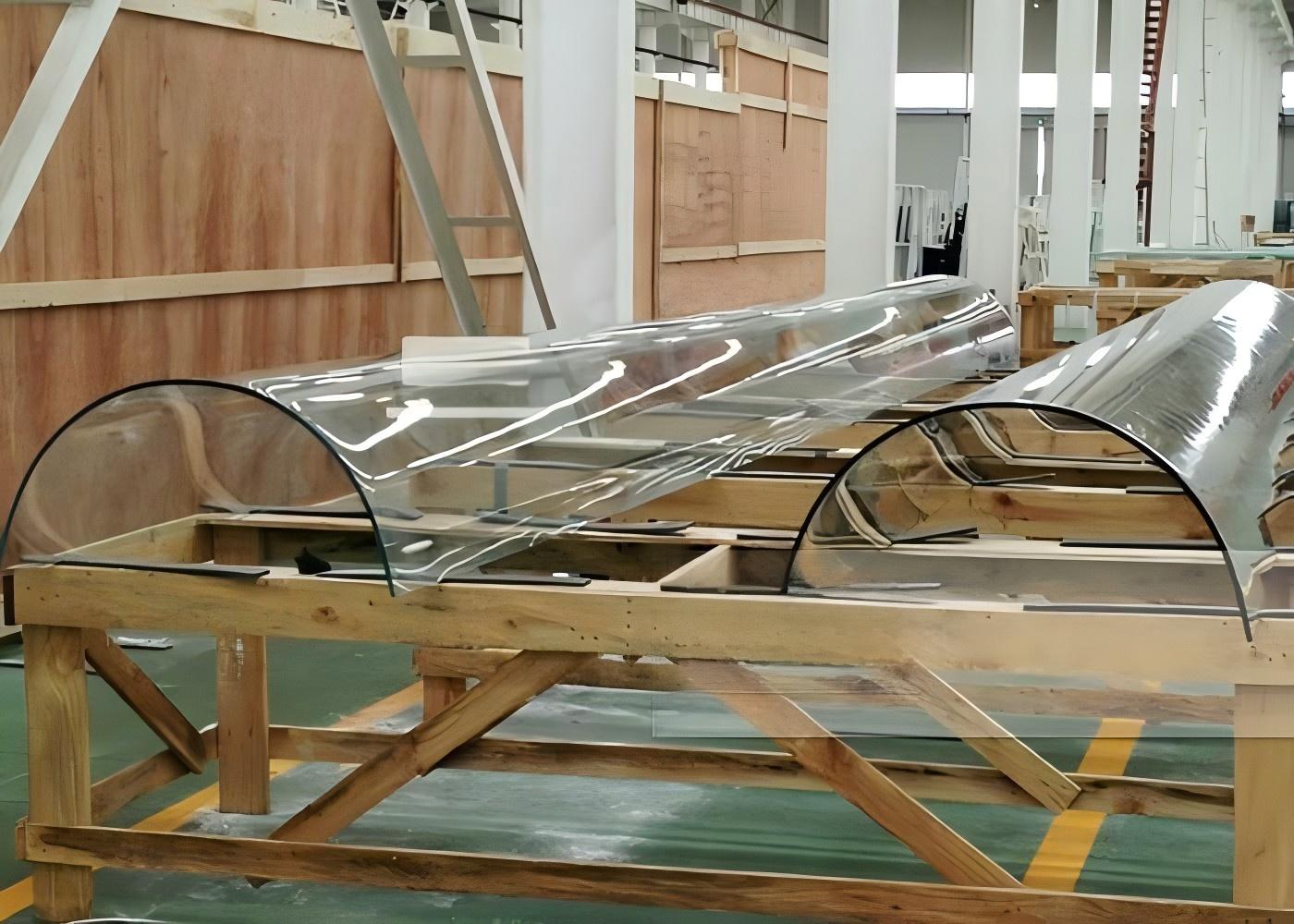
Hot Bent Glass
Hot Bent Glass Customizable Options
Thickness: 4mm to 19mm
Curvature: Customizable to design specifications
Glass Type: Various options available
Common Configurations: Available for selection
Differences and Advantages: Bent Tempered Glass vs. Hot-Bent Glass
Glass products can be categorized by different characteristics, including functionality. Bent tempered glass and hot-bent glass represent two distinct types of functional glass. While they share some similarities, they also have important differences. Here's how to distinguish between them:
1. Different Processing Methods
Hot-Bent Glass: Processed using a hot-bending furnace. Most manufacturers use electric heating furnaces, which provide precise temperature control, ease of operation, and no pollution to the glass. This method ensures high product quality and consistency. Computer-integrated control systems allow for programmed management of the hot-bending process. Note: A hot-bending furnace can typically process only one piece of glass at a time.
Bent Tempered Glass: Produced by heating glass to its softening point using specialized molds and equipment, then rapidly cooling it with cold air. This tempering process creates uniform compressive stress on the surface and tensile stress inside, significantly improving the glass's bending and impact resistance—making it up to four times stronger than ordinary glass. When broken, it fragments into small, granular pieces without sharp edges, qualifying it as safety glass.
2. High Strength
Bent tempered glass of the same thickness offers 3–5 times the impact resistance and bending strength of ordinary glass.
3. Safety
When broken due to external force, the glass shatters into small, blunt, honeycomb-like particles, reducing the risk of injury.
4. Enhanced Strength and Improved Safety
Compared to ordinary glass, bent tempered glass demonstrates significantly increased strength and load-bearing capacity, reducing its fragility. Even when fractured, it breaks into small, non-sharp fragments, greatly minimizing potential harm. Additionally, its resistance to thermal shock is 2–3 times higher than that of ordinary glass, typically withstanding temperature differences exceeding 150°C, effectively preventing thermal breakage.
5. Thermal Stability
Bent tempered glass exhibits excellent thermal stability, withstanding temperature differences up to three times greater than ordinary glass (approximately 200°C).
Applications of Bent Tempered Glass and Hot-Bent Glass:
Both bent tempered glass and hot-bent glass are widely used in:
High-rise building windows and doors
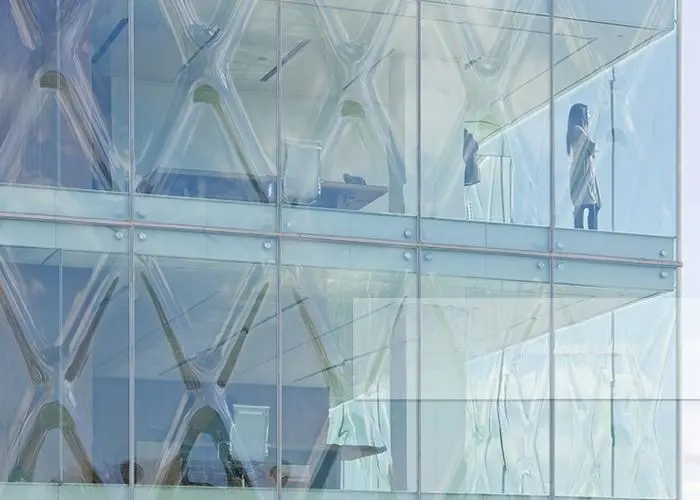
Glass curtain walls
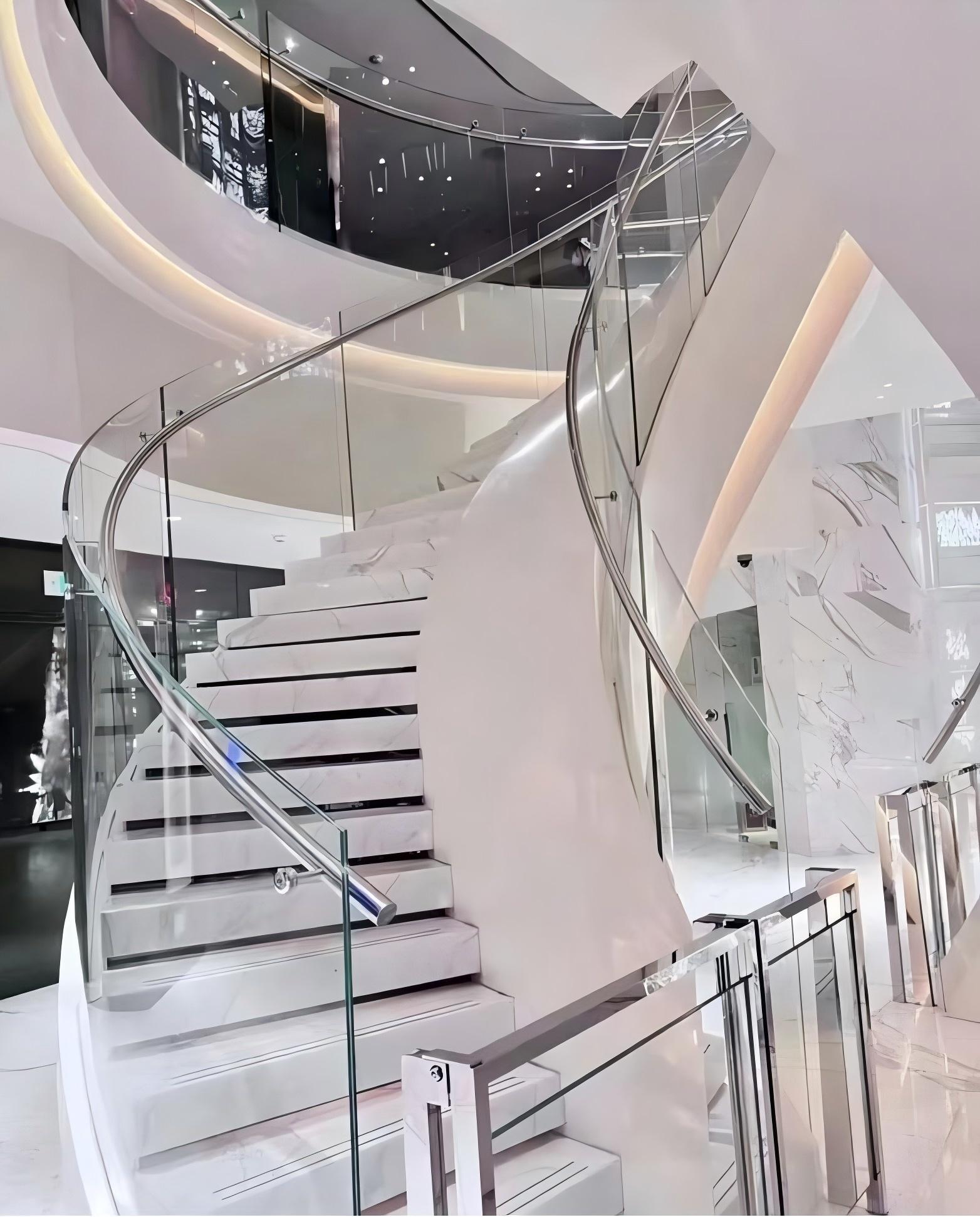
Staircase railings
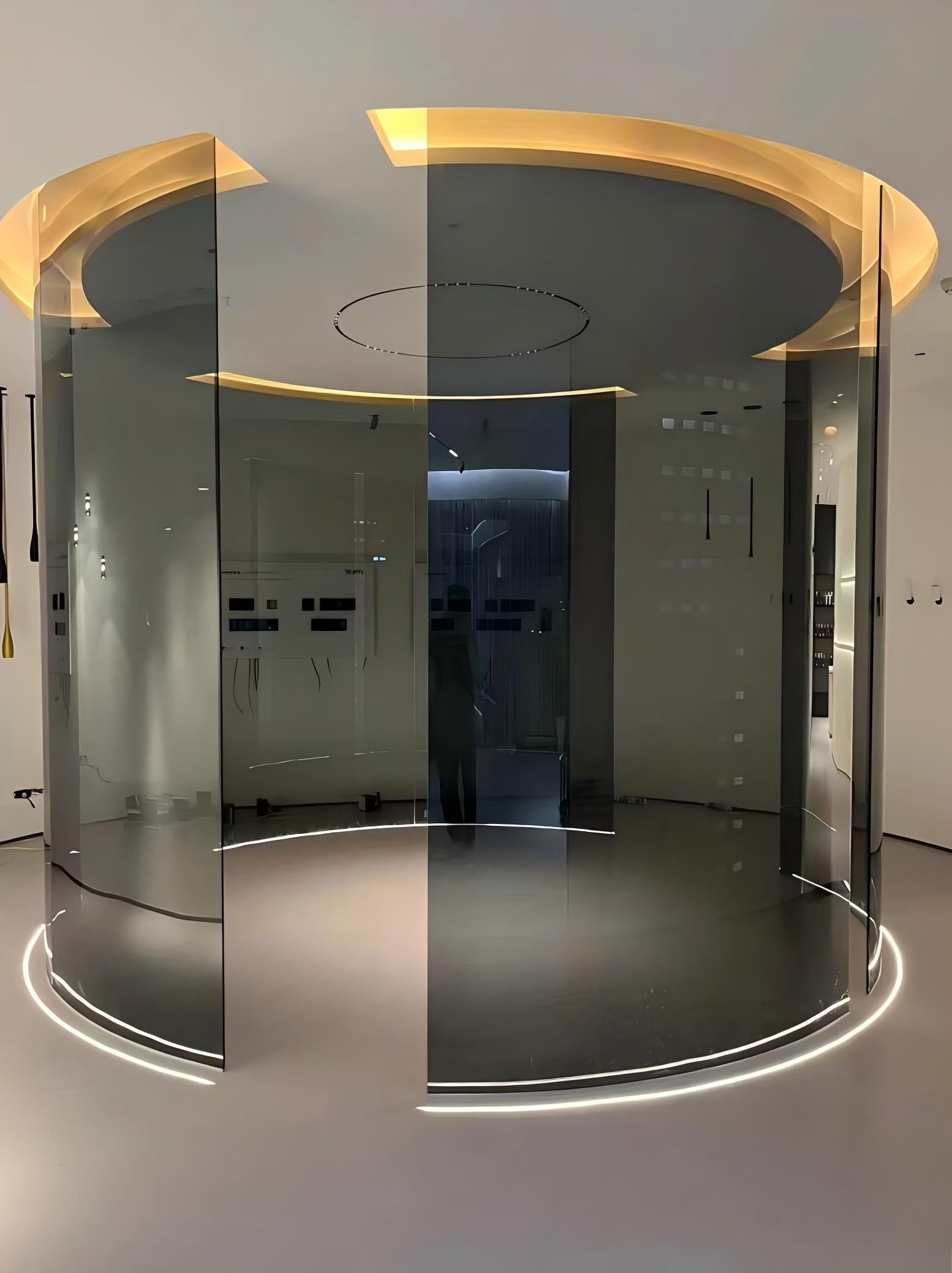
Interior partition glass
Skylights and canopy glazing
Sightseeing elevator enclosures
Furniture
Disadvantages of Tempered Glass:
Although stronger than ordinary glass, tempered glass may spontaneously break under significant temperature variations—a risk not present in ordinary glass.
Once tempered, the glass cannot be cut or reprocessed. All shaping and cutting must be completed before tempering
Hot-Bent Glass Process
Hot-bent glass meets the high-quality demands of modern architecture. It is made by heating high-quality glass until soft, forming it in a mold, and then annealing it to produce curved glass. With its aesthetic appeal and smooth lines, hot-bent glass breaks away from the limitations of flat glass, offering greater flexibility and diversity in application.
Classification by Shape:
Hot-bent glass can be divided into three main types: single bend, folded bend, and compound bend.
Processing Considerations:
Single Bend: This is relatively straightforward for architectural glass. However, a common technical challenge is ensuring the curved section, particularly within approximately 150mm of the straight edge, conforms perfectly to the mold. Imperfections here can exceed tolerances and complicate installation. To address this, the layout of the electrical heating elements within the furnace must be optimized to allow for targeted, localized heating. Additionally, the orientation of the glass within the furnace must align correctly with the direction of the heating elements.
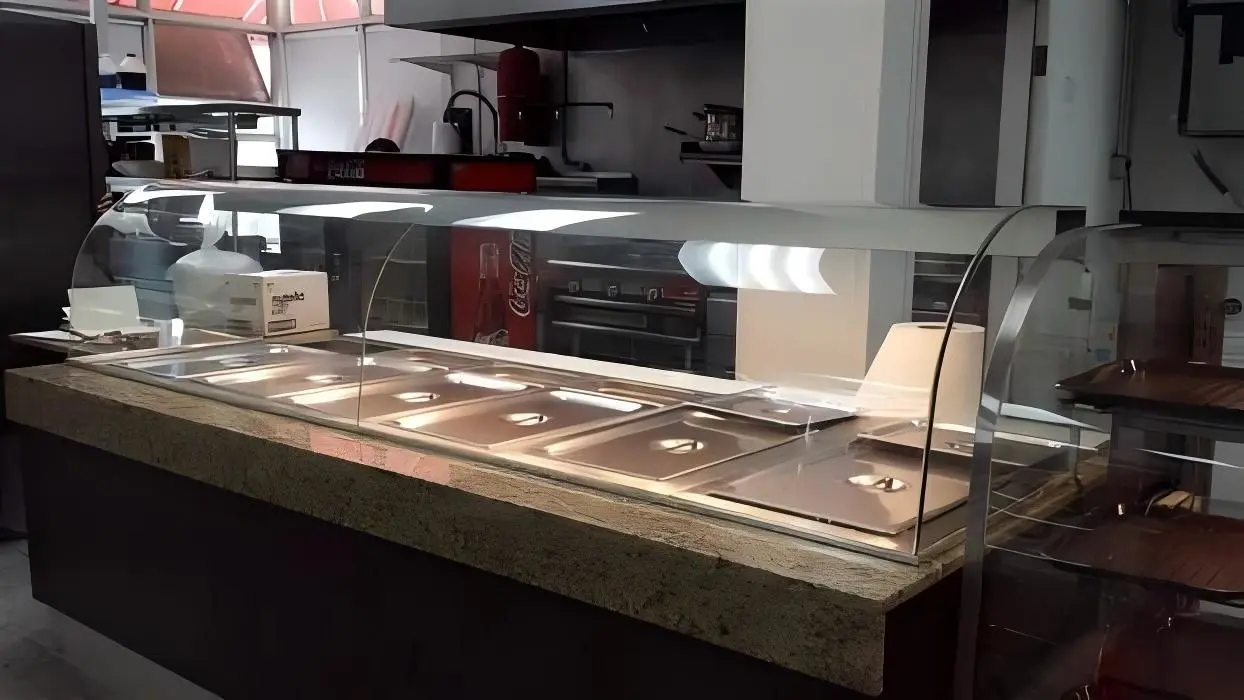
Folded Bend: Commonly seen in aquarium panels and display counters. The primary technical difficulties involve preventing distortion of the straight edges and avoiding mold marks at the fold points. Producing this type requires advanced expertise, highly precise molds, and often specialized furnaces.
Compound Bend: Examples include spherical glass, curved arched corridors, and glass washbasins. From a mechanical standpoint, during the hot-bending process, forces concentrate from the edges toward the center. If these forces exceed the glass's allowable stress, cracking can occur. Applying auxiliary external support during the bending process is an effective method to mitigate this risk.
Additional Hot-Bent Glass Usage Scenarios
Architectural & Interior Design: Curved glass railings, decorative partitions, arched windows and doors, modern staircase designs, and premium interior features.
Retail & Exhibition: Elegant curved display counters, museum and gallery exhibit cases, luxury retail interiors, and product showcases.
Aquariums & Zoos: Large seamless curved viewing panels, underwater tunnels, and wildlife observation windows.
Automotive & Transportation: Curved windows for vehicles, buses, trains, and marine applications.
Home Appliances: Stylish curved glass for oven doors, refrigerator panels, fireplace screens, and modern kitchen designs.
Lighting: Decorative and functional curved glass lampshades, light covers, and architectural lighting elements.
Why Choose Our Bent Glass Solutions?
Customized Design: We tailor thickness, curvature, size, and glass type to your exact specifications.
Quality Assurance: Advanced computer-controlled processing ensures precision, consistency, and superior performance.
Safety Options: Tempered and laminated versions available for enhanced protection.
Aesthetic Flexibility: Achieve sleek, modern designs with smooth, continuous curves.
Wide Applications: Suitable for diverse projects across architecture, interior design, retail, and specialty installations.