Ionoplast Interlayer-IPL-OT
Thickness: 0.76mm,0.89mm, 1.14mm, 1.52mm
Length: 50m~100m
Width: 2500mm - 3600mm
0.76mm Standard Weight: 760g/㎡,
Factory direct sales,
Customizable: Infrared heat insulation
IPL-OT Ionoplast Interlayer Film | High Transparency Laminated Glass Interlayer (SGP Alternative)
Next-Generation SGP Alternative for High-Performance Laminated Glass
Features
1. Exceptional Optical Clarity
• Light Transmittance: >90%
• Haze: <0.5%
• Low Yellowness Index (YI)
Ensures crystal-clear visibility, ideal for high-end architectural glass and display applications.
2. Structural Performance (SGP-Level Strength)
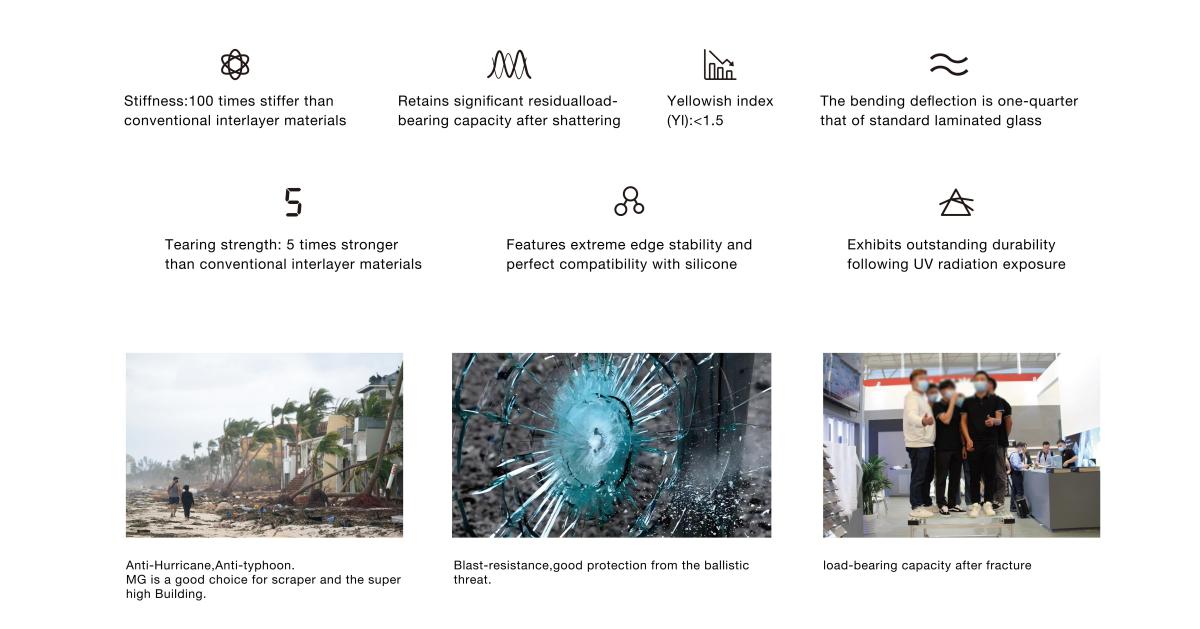
• High stiffness and load-bearing capacity
• Improved post-breakage integrity
• Suitable for structural glazing and safety-critical applications
3. Superior Durability
• Excellent resistance to UV exposure
• Long-term edge stability
• Reduced yellowing over time
4. Design Flexibility
• Compatible with complex laminated structures
• Suitable for oversized glass panels
Application
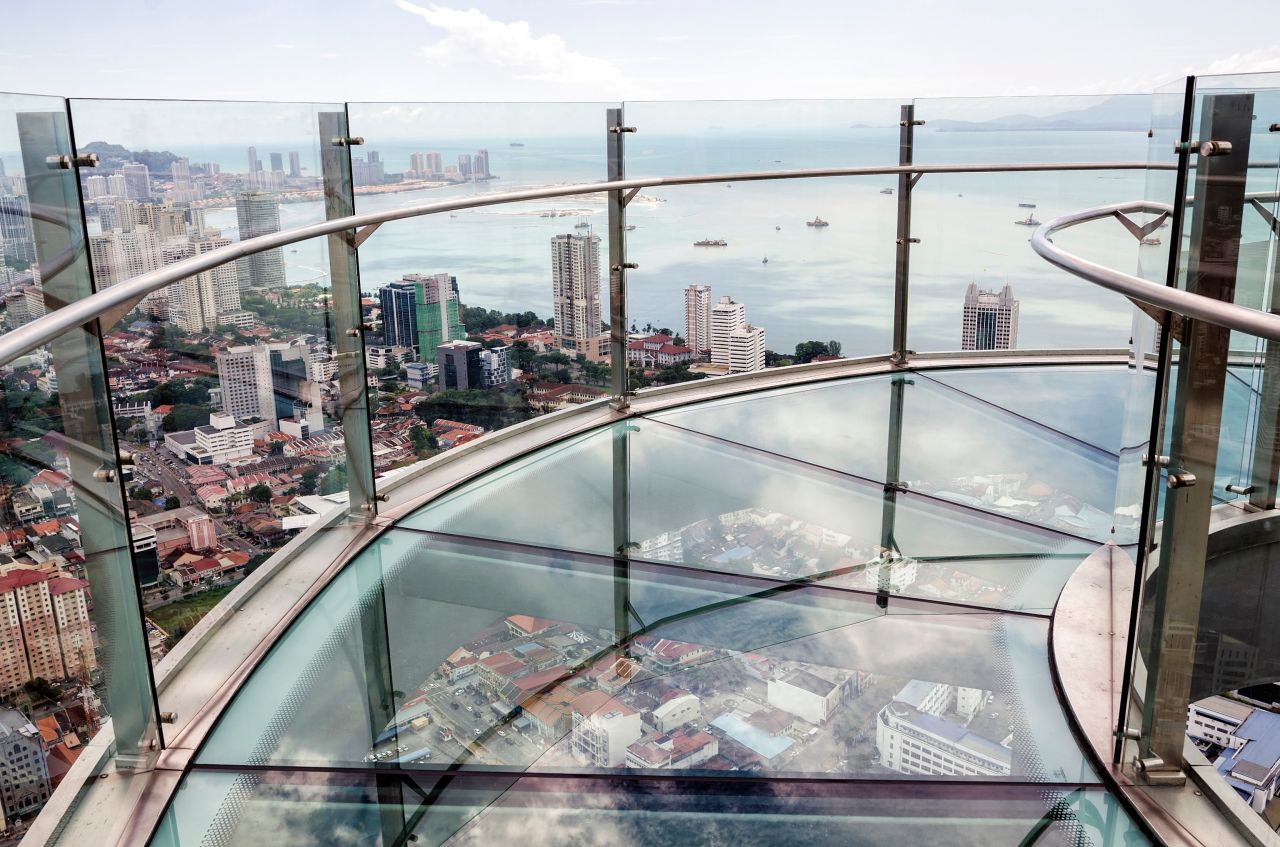
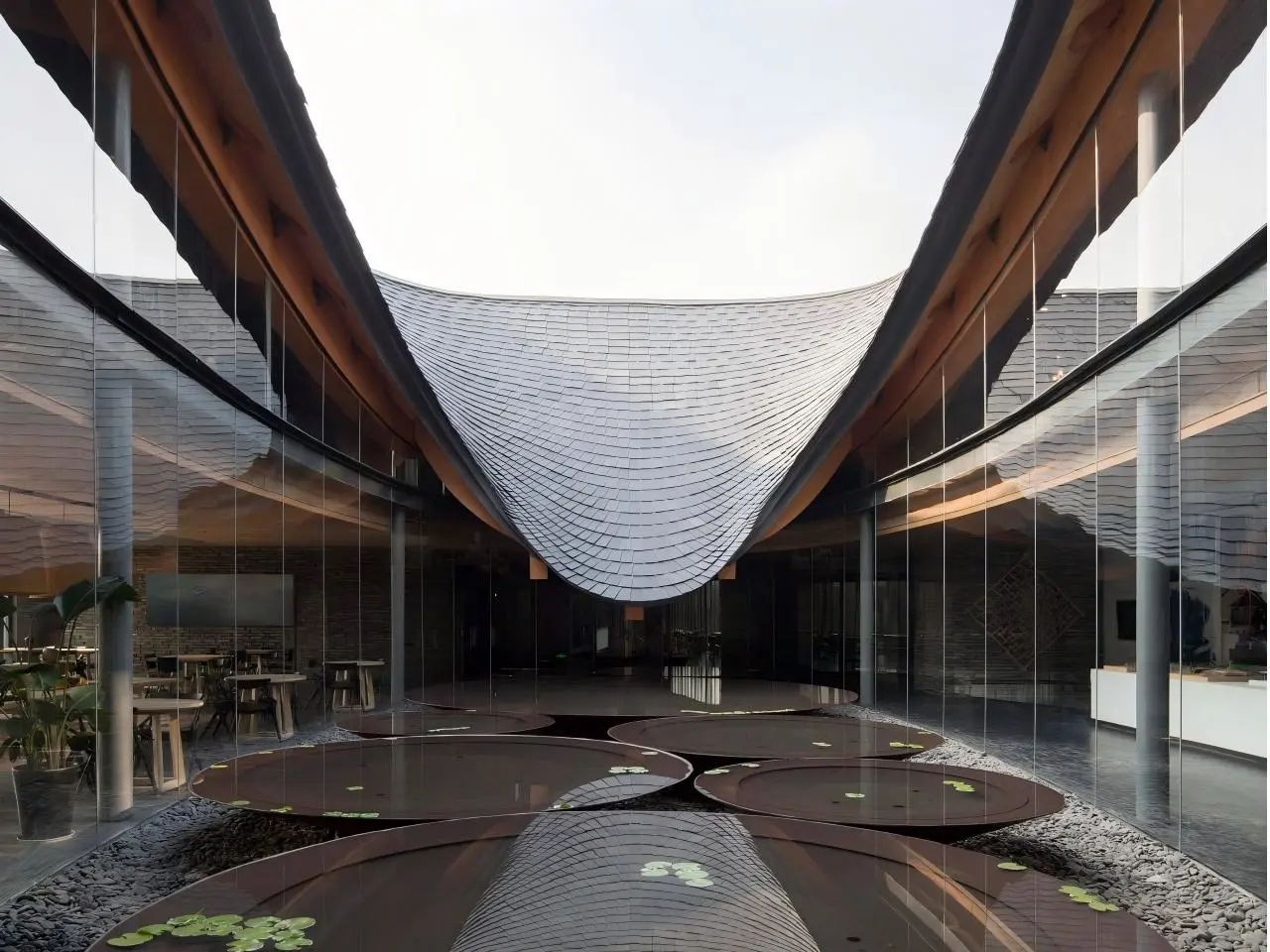
High Impact Structures
High Safety Requirement Locations
Weather-Resistant Applications
Secure Exhibits:
IPL - Ionoplast Interlayer provides high strength and durability suitable for façade, balustrades, and canopies. IPL has revolutionized architectural glass by delivering an unprecedented combination of extreme strength and remarkable lightness. Its superior structural integrity allows for larger, more transparent spans with significantly slimmer profiles, redefining the limits of design.
Unlike traditional interlayers, IPL's exceptional stiffness and tear resistance create a laminated glass that acts as a structural component itself, enhancing safety and enabling breathtaking, gravity-defying applications from immense glass floors to soaring cantilevered canopies.
IPL Performance Parameter
| Test item | Test method | Unit | Test conditions | Ionoplast-IPL | |
|---|---|---|---|---|---|
| Physical | Density | ASTM D792 | g/cm3 | - | 0.93~0.98 |
| Hardness | ASTM D2240 | Shore D | Stack to 12.5mm | 65 | |
| Mechanical | Elongation at break | ASTM D638 | % | - | >225 |
| Tearing strength | GB/T 1130-1991 | KN/m | - | >120 | |
| Tensile strength | ASTM D638 | MPa | - | >34 | |
| Knocking value | T/ZBH 014-2021 | - | - | >Level 7 | |
| Residual strength after destruction | T/ZBH 014-2021 | cm | 6mm tempered glass+0.76mmMG+6mm tempered glass | Front end descending distance <5cm | |
| Thermal | Coefficient of thermal expansion | ASTM D831 | cm/cm·℃ | -20℃~32℃ | 10~15×10-3 |
| Thermal deflection temperature | ASTM D831 | ℃ | - | 40 | |
| Melting point | ASTM D831 | ℃ | - | 94 | |
| Flashing point | ASTM D1929 | ℃ | - | 470 | |
| Optical | Yellowing index | JC/T2166-2013 | % | - | <1.5 |
| Index of refraction (20℃) | JC/T2166-2013 | % | - | 1.5 | |
| VL transmittance | JC/T2166-2013 | % | Thickness 0.76mm | >90 | |
| Haze | JC/T2166-2013 | % | Thickness 0.76mm | <0.5 | |
| UV blocked rate | JC/T2166-2013 | % | UV crest: 360nm | >99 |
Note: The information and data provided are based on tests performed in our company's technical department laboratory and are believed to be accurate. However, we do not guarantee their completeness or accuracy. This document is for reference only. Users should determine the suitability of the information and data for their specific purposes before use. We are not liable for any damages arising from the use of or reliance on this document or the products mentioned within.
Packing Specification
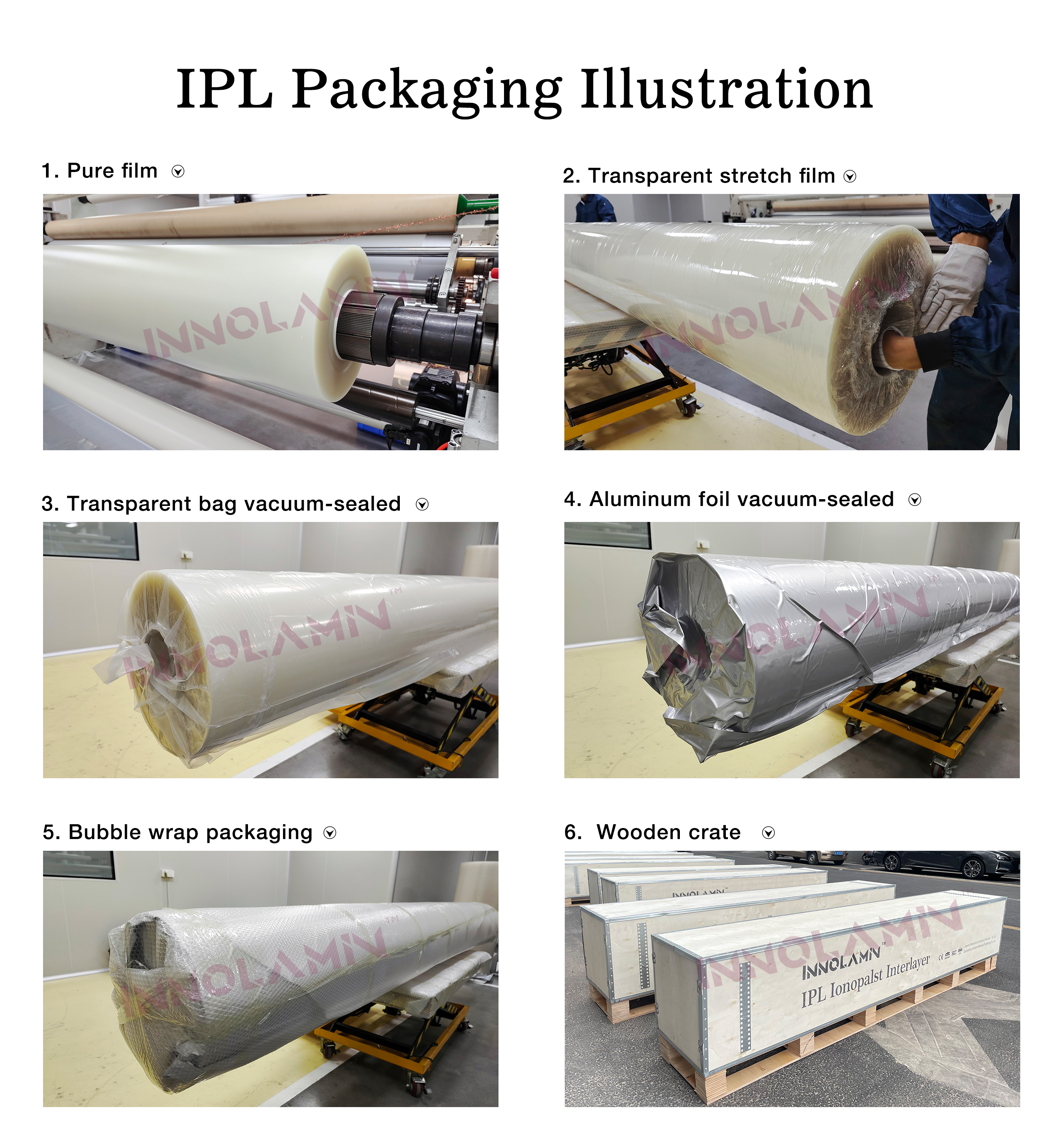
Winding film+ double layer vacuum bag+ bubble wrap + plywood case
Shelf Life of Product
24 months (Unpacked)
Instructions for use of INNOLAMIN™ ionoplast interlayer - IPL
- This product is packaged in two vacuum bags at the time of factory shipment, primarily to protect the product from external moisture.
- After opening, it must be stored in an environment with a temperature ≤25°C and humidity ≤30%. Due to the ionic nature of the interlayer film, it easily reacts with moisture in the air, leading to an increase in water content. This can reduce the material's transparency and optical performance, degrade its mechanical properties, and damage its internal structure, affecting its overall stability and ultimately rendering the product unusable.
- Improper handling of the product during storage can cause a significant number of bubbles to form in the laminated glass and a drastic reduction in adhesion to the glass.
- Slice open one long side of the packaging bag with a knife, Gently shake the bag and remove the INNOLAMIN™ Ionoplast-IPL.
- During the removal and handling process, it is essential for operators to wear lint-free gloves and attire that is both dust-proof and anti-static. This precaution prevents contamination within the laminated glass, which can occur due to electrostatic attraction of impurities from the INNOLAMIN™ Ionoplast-IPL.
- During intermittent production, it is necessary to seal the INNOLAMIN™ Ionoplast-IPL packaging bag with either tape or a heat sealer. This measure prevents the LGML™ Ionoplast-IPL from being exposed to the atmosphere and absorbing moisture, which could result in reduced bonding performance.
- It is advisable to measure the moisture level of INNOLAMIN™ Ionoplast-IPL using the thermogravimetric method prior to each production run. This ensures that the moisture content of the film remains below 0.2%.
Rolling Process Control
- The operator should verify the tin side of the incoming glass to ensure the laminated glass structure is arranged as follows: empty/tin/INNOLAMIN™ IPL/tin/empty. Due to the ionic bonding method between the INNOLAMIN™ IPL interlayer and the glass, ensuring the tin surface of the glass faces the interior of the laminated glass enhances bonding strength and extends the product's lifespan.
- Maintain the quality of the water in the washing machine, preferably using deionized water, to eliminate impurities such as organic residues after cleaning the glass. This will prevent stains and minimize adhesion issues between the INNOLAMIN™ IPL and the glass, as well as keep the interior of the laminated product free from contaminants.
- When manufacturing tempered laminated glass, it is crucial to meticulously control the flatness (bow and wave) of the tempered glass and ensure the precise alignment of the two glass pieces to enhance the edge sealing quality.
- Before laminating the sheets, workers should use a glue roller to remove any impurities from the Ionoplast-IPL. This includes contaminants embedded within the Ionoplast-IPL, those adsorbed onto the surface, and any particles that may have inadvertently settled on the film.
- When cutting Ionoplast-IPL, employ a wallpaper knife to trace an outline along the template, and then pull apart the Ionoplast-IPL along the scored lines.
6. Rolling process parameters are as follows
| Rolling Process Parameters | ||||
|---|---|---|---|---|
| Glass Thickness Clip 1.52mm Film | Preheating Zone Temperature (℃) | The Temperature of the First Area of the Main Box (℃) | The Temperature of the Second Area of the Main Box (℃) | Rolling Speed (m/min) |
| 6+1.52+6 | 150 | 190 | 190 | 1.4 or 1.5 |
| 8+1.52+8 | 150 | 200 | 200 | 1.0 or 1.2 |
| 10+1.52+10 | 150 | 210 | 200 | 0.9 or 1.0 |
| 12+1.52+12 | 150 | 210 | 200 | 0.7 or 0.8 |
The above parameters are for reference only, each unit can reasonably adjust the parameter design (temperature and speed) according to the glass length, layout size, and equipment conditions.
7.For all types of coatings (such as color glaze surfaces, sunshine film surfaces, and low-E film surfaces) that come into contact with INNOLAMIN™ Ionoplast-IPL in synthetic laminated glass, it is essential to perform compatibility and bond performance tests to assess the product's machinability and quality.
8.Given the rigidity of INNOLAMIN™ Ionoplast-IPL, prepressing the initial set of rollers is typically unnecessary. Instead, only the second set of rollers after the main heating furnace should be employed for single-layer applications. (Note: For multi-layer applications, ensure the upper and lower glass are secured with high-temperature adhesive to prevent misalignment.)
9.The gap for the second set of rollers should be 3mm less than the glass's nominal thickness. The surface temperature of these rollers should maintain 65±3℃. Adjust the roller speed based on the glass surface temperature and the edge sealing condition post-prepressing.
10.Following prepressing, the spacing of the glass on the stacking shelf should be at least the glass's nominal thickness. Additionally, using metal rods as spacers is not advisable as they can disrupt normal airflow between the glass sheets, causing uneven heating and cooling, and resulting in light distortion due to uneven force on the glass surface.
11.The heat preservation temperature of the autoclave is not lower than 135℃, the heat preservation time is not less than 90min, the working pressure is 11.5~12.8bar, and the exhaust temperature is not higher than 42℃.
Vacuum extractiom process:
For laminated glass consisting of more than two layers or multiple layers of film, rolling is not recommended. Instead, use the vacuum process. The laminated glass can be pre-rolled without complete edge sealing, followed by vacuum bag treatment (cold pumping). For larger glass layouts or numerous interlayers, it is advisable to use additional suction silica gel tubes to maintain the vacuum level within the vacuum bag.
Storage and Transportation:
5.It is advisable to use the purchased interlayer within two years from the purchase date to minimize any potential decline in bonding performance.
FAQ:
Q: Is IPL the same as SGP?
A: IPL is our own brand of ionoplast interlayer with the same technical properties and performance standards as SGP (SentryGlas Plus).