Solving Trapped Air Issues in 5-Sided Irregular Large-Size SGP Laminated Glass with Multiple Openings
2026-07-16
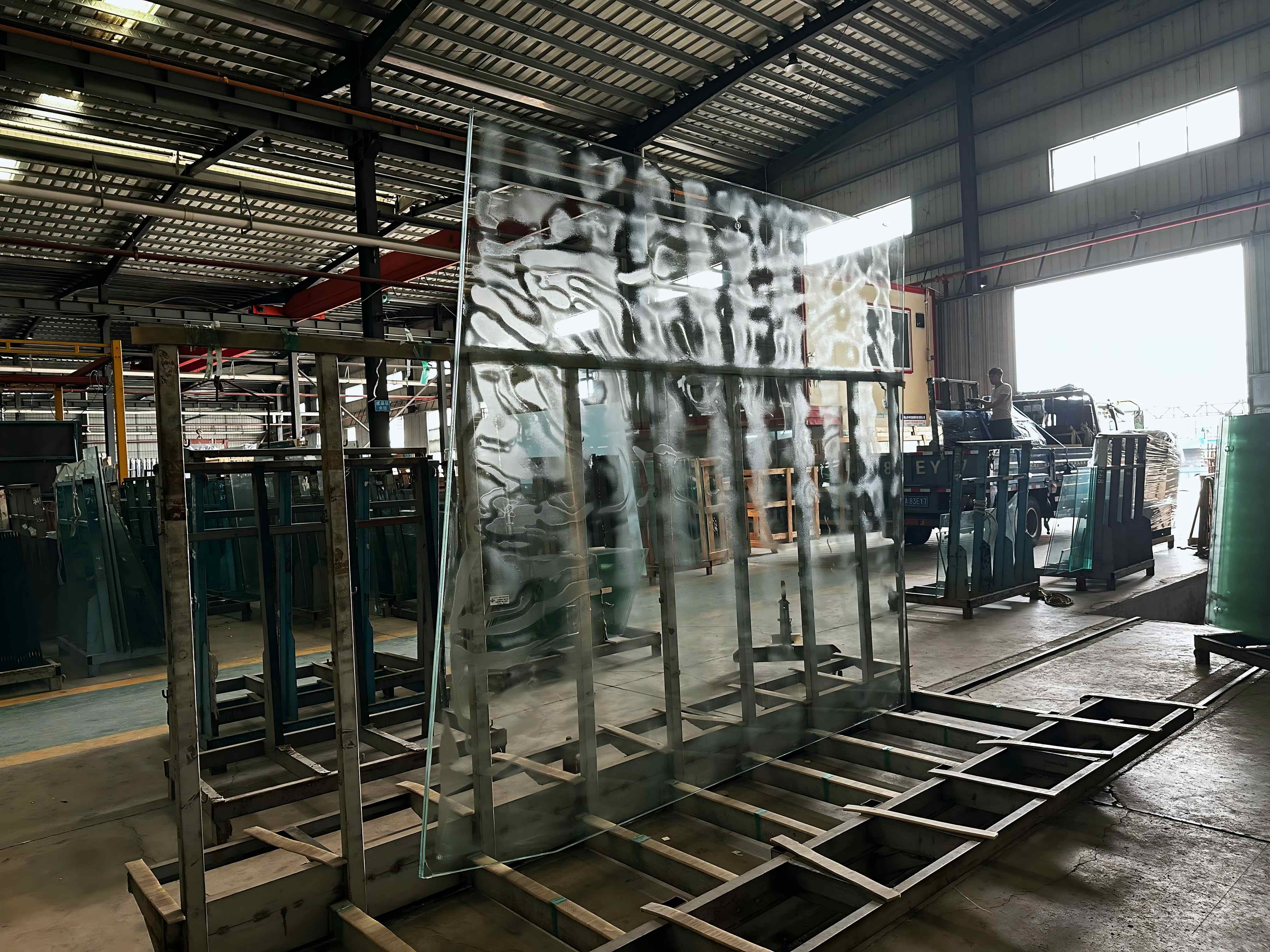
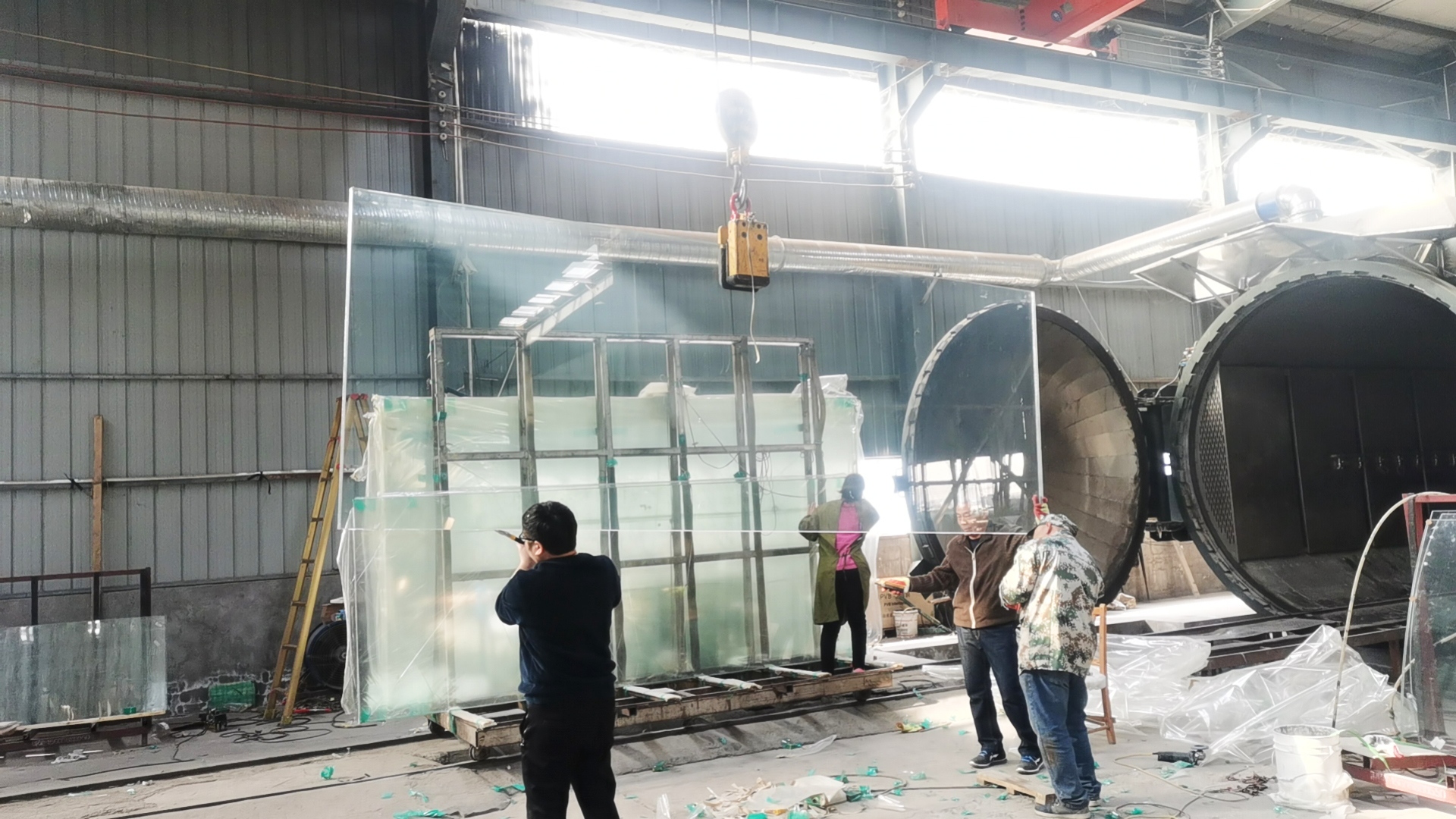
In the architectural glass deep processing industry, the production of large-size shaped SGP laminated glass has long been recognized as a technical challenge. Recently, a client encountered severe trapped air (air entrapment) issues while manufacturing a batch of 5-sided irregular, large-size SGP laminated glass with multiple openings. The first rolling cycle produced glass with extensive air bubbles. Even after re-bagging and re-applying vacuum, the entire batch was still rejected after autoclaving, bringing production to a halt.
Trapped Air in SGP Laminated Glass: A Common Pain Point in Large-Size Shaped Glass Processing
SGP (SentryGlas Plus) laminated glass is widely used in high-end architectural projects such as curtain walls, railings and skylights due to its exceptional impact resistance and structural strength. However, for 5-sided irregular, large-size SGP laminated glass with multiple openings, conventional processing methods often fall short:
- Difficult air evacuation along irregular edges: The asymmetrical pentagonal shape creates uneven air escape paths during rolling, trapping air between the interlayer and glass surfaces.
- Complex stress distribution around multiple openings: Openings interrupt interlayer flow and air evacuation channels, creating localized trapped air zones.
- Challenging temperature control for large glass panels: Uneven heating across large glass surfaces leads to inconsistent SGP interlayer softening, further hindering air removal.
The trapped air problem the client faced is a classic case of these multiple factors compounding together. Standard remedial measures — re-vacuuming with a new bag — cannot resolve the issue at its root. A systematic adjustment of process parameters is required.
Precise Diagnosis + Parameter Optimization:
Comprehensive Tuning from Equipment Status to Process Data
Upon receiving the client's technical support request, our professional technical service team arrived on-site immediately to conduct a full inspection of equipment operating conditions and production parameter data. Based on the glass structure and current condition, the team adjusted parameters across three core dimensions:
1. Fine-Tuned Temperature Profile
To address the temperature differential between the edges and center of the 5-sided irregular glass, the heating zone temperature distribution was optimized, ensuring uniform softening of the SGP interlayer across the entire panel — creating consistent material conditions for subsequent air evacuation.
2. Optimized Rolling Speed Gradient
Large-size shaped glass requires a longer time window for air evacuation. By adjusting the rolling speed curve and reducing travel speed through the critical degassing section, air is given sufficient time to escape from edges and around openings.
3. Stage-Matched Pressure Settings
Differentiated pressure settings were applied to the pre-pressing and main pressing stages, tailored to the glass structure. This ensures full adhesion between the interlayer and glass while preventing premature edge sealing that would trap internal gas.
Solving Problems and Building Client Capability
The value of technical service extends far beyond fixing a single batch. During on-site commissioning, the technical team patiently explained the principles behind every parameter adjustment to the client's laminating operators, sharing process tuning techniques for different glass configurations:
- How to anticipate air evacuation challenges based on glass geometry
- How to fine-tune parameters in real time by observing rolling conditions
- Best practices for vacuum bagging on shaped and perforated glass
- Causes and prevention methods for common bubble defects
This unreserved knowledge transfer enabled the client's operators to not only understand what to adjust, but why — building independent capability to handle similar shaped SGP laminated glass orders.
Remarkable Results: 98% Autoclave Success Rate, Defective Panels Successfully Salvaged
After process parameter optimization and operational training, the client's subsequent production of 5-sided irregular large-size SGP laminated glass with multiple openings achieved an autoclave success rate of 98%.
Out of the entire batch, only two panels showed minor bubbles around the openings. Guided by our technical team, these two defective panels underwent re-autoclaving with targeted secondary process adjustments and ultimately passed quality standards — minimizing material waste.
Conclusion
Trapped air issues in large-size shaped SGP laminated glass may appear as simple bubble defects on the surface, but they fundamentally reflect a mismatch between glass structure, material properties and process parameters. Only through fine-tuning the entire workflow — from equipment status to temperature, speed and pressure — can the problem be resolved at its source.
As architectural glass trends toward larger sizes, more complex shapes and higher performance, professional technical service capability has become a core competitive advantage for deep processing enterprises. Backed by professional expertise and a commitment to client empowerment, we stand ready to partner with industry peers to overcome every technical challenge in glass deep processing.
SGP Laminated Glass in Extreme Cold: Does Repeated Freeze-Thaw Cause Fogging, Bubbles, or Delamination?
Related Article
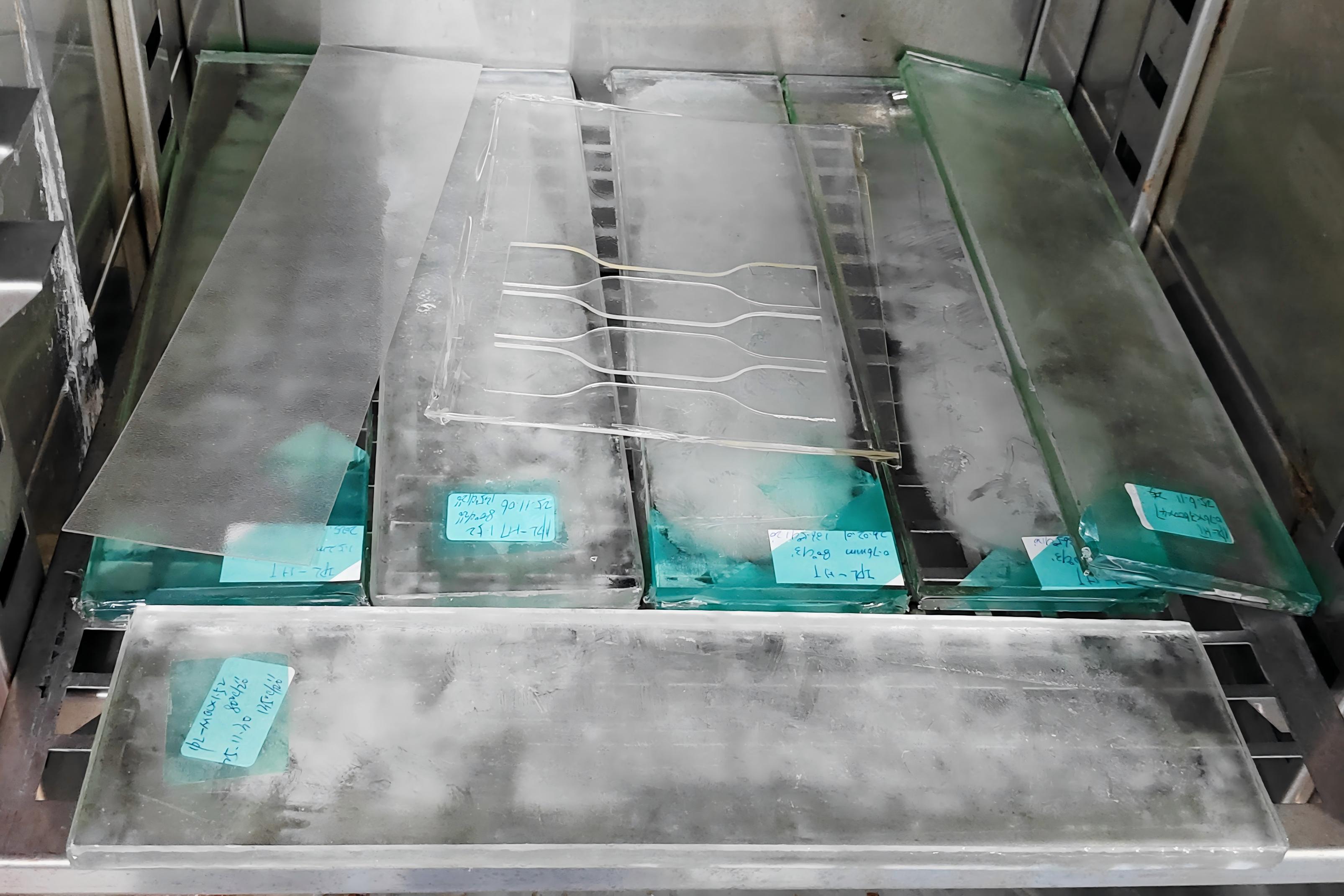
Rigorous freeze-thaw testing proves IPL (sgp ionoplast interlayer )maintains crystal clarity, strong adhesion, and no defects after 10 extreme cycles at -20°C. Reliable for cold-climate architecture.
SGP Laminated Glass in Extreme Cold: Does Repeated Freeze-Thaw Cause Fogging, Bubbles, or Delamination?
Solve internal fogging defects of SGP laminated glass by optimizing autoclave parameters (temperature, cooling rate). Professional laminated glass reprocessing & glass deep processing solutions.
Case Study:SGP Laminated Glass Fogging Defects of Consistent Shape