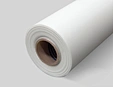


EVA Interlayer Film Jade Sand White for Laminated Glass
INNOLAMIN Jade Sand White EVA Interlayer Film for Laminated Glass
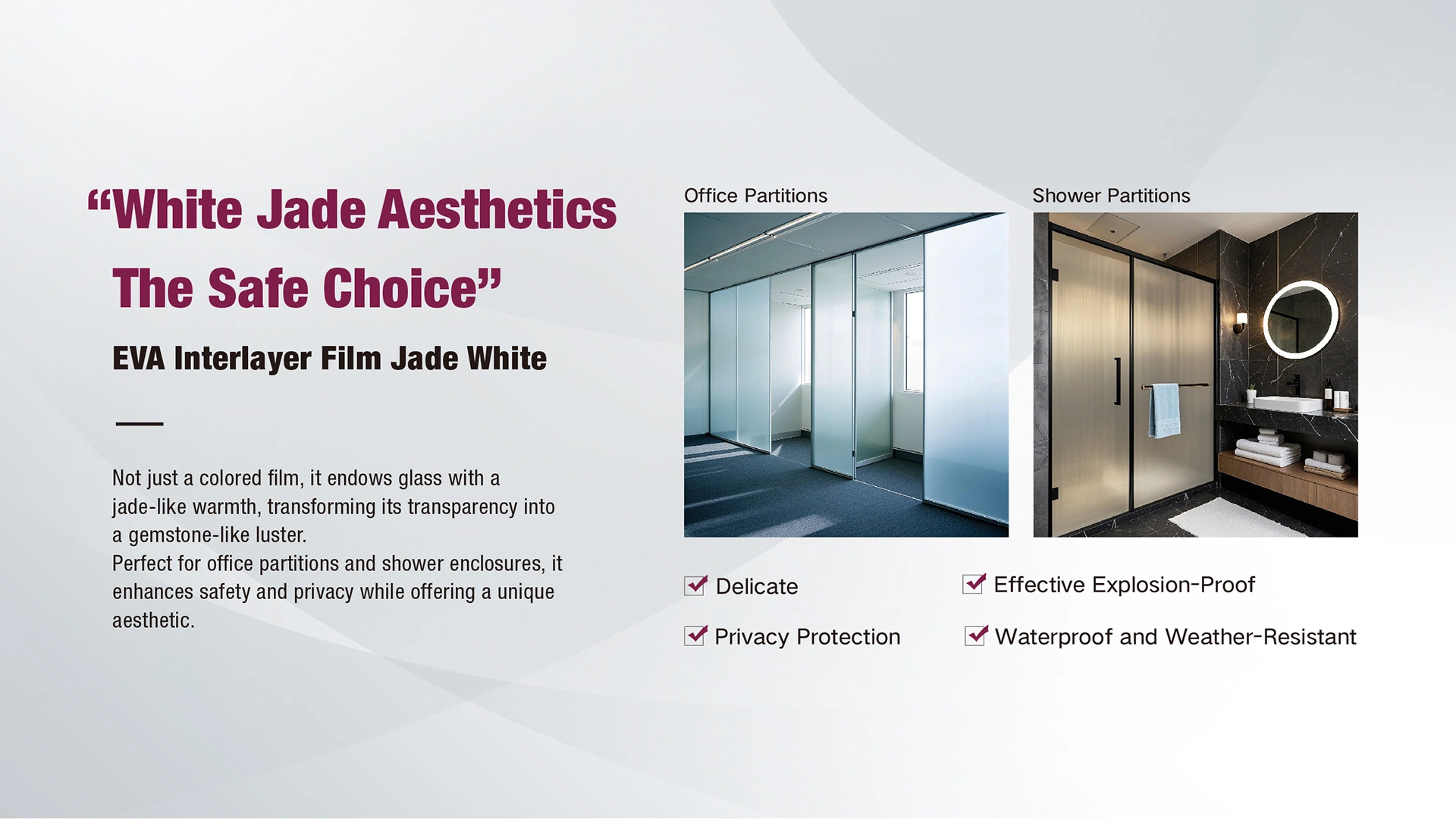
Jade Sand White EVA interlayer film Introduction
Guangdong Innolamin Materials Technology Co., Ltd. presents the Jade Sand White E-JWM EVA interlayer film, a premium member of our cross-linked outdoor white series. Engineered specifically for creating high-performance laminated glass, this film delivers exceptional adhesion, superior long-term weather resistance, and a beautifully uniform jade sand white aesthetic. The E-JWM EVA interlayer film is the ideal choice for fabricating elegant decorative and architectural glass that combines artistic visual effects with reliable structural performance.
Product Specifications
Model: E-JWM
Thickness: 0.38 mm
Standard Width: 2000 mm / 2200 mm / 2400 mm
Roll Length: 50 m
Packaging: Vacuum-sealed bag with protective shockproof film and reinforced composite kraft paper.
Performance Data
Optical Properties:
Haze: 93.5%
Visible Light Transmission: 22.4%
UV Transmission: 10.1%
Physical & Mechanical Properties:
Type: Cross-linked
180° Peel Strength: 97.4 N/cm
Tensile Strength: 20.1 MPa
Durability & Weatherability:
This EVA interlayer film undergoes rigorous testing to ensure reliable performance in demanding environments.
Boiling Water Test (100°C for 2 hours): No bubbles, delamination, or haze.
Damp Heat Test (85°C & 85% RH for 1000 hours): No bubbles, delamination, or fogging.
UV Resistance Test (200 hours): Yellowing index ΔYi ≤ 1, ensuring excellent color stability.
Compatible Lamination Materials
The Jade Sand White E-JWM film is suitable for laminating with a wide range of materials to create unique decorative laminated glass:
Inorganic Materials: Glass, marble, ceramic tiles, metal, and their printed substrates.
Organic Materials: PMMA, PC, PET, PVC, and their printed substrates.
Other Interlayer Materials: Silk, satin, cotton, linen, paper, honeycomb panels, and their prints.
Processing Guidelines & Key Considerations
Surface Preparation: Ensure glass is meticulously cleaned and completely dry, free from dust, particles, or oily residues.
Oven Pre-treatment: Initiate a cold pump cycle for 3-5 minutes upon starting the laminating oven until a vacuum of -0.095MPa is achieved before closing the door and commencing heat.
Recommended Lamination Cycle:
First Stage: 60°C for 20 minutes.
Second Stage: 125°C for 60 minutes.
Vacuum: Maintain a continuous vacuum of -0.095MPa throughout the cycle.
Cooling: Allow the glass to cool below 60°C before removal from the oven.
*Note: This cycle is a guideline for a 5mm glass / 0.38mm EVA / 5mm glass structure. Parameters may require adjustment based on equipment, ambient conditions, glass thickness, and interlayer materials.*
Pre-production Sample Testing: Always produce a sample glass panel (minimum area 0.5 m²) using the recommended process to verify final product quality, color, and adhesion before beginning full-scale production.
Sealant Compatibility: When installing the finished laminated glass, verify the compatibility of any silicone-based or structural sealants with the EVA interlayer film to prevent edge delamination, bubbling, or darkening.
Storage, Transportation & Shelf Life
Storage Conditions: Store in a cool, dry place at temperatures below 25°C and relative humidity below 50%. Protect from direct sunlight, moisture, heat sources, and physical compression.
Shelf Life: 360 days from the date of manufacture when stored under recommended conditions.
Post-Opening: Once the original packaging is opened, reseal unused film tightly to protect it from dust and moisture. It is recommended to use the material within 3 months and to produce a verification sample prior to subsequent use.